External Reference: Public Authority for Applied Education and Training Kuwait (PAAET) — a helpful resource for understanding Kuwait’s construction standards and certified metalwork practices.
Planning a visit? Kuwait’s official tourism site is a great place to explore everything the country has to offer.
Quick Answer: What Is a Waterproof Shade Structure in Kuwait?
A waterproof shade structure in Kuwait is an outdoor canopy built from PVC, polycarbonate, or coated fabric that blocks both sunlight and rain. Unlike standard shade fabric, waterproof materials prevent water penetration entirely, making outdoor spaces fully protected year-round — from scorching summer sun to winter rain events.
The Smart Reason Kuwait Property Owners Are Investing in Waterproof Shade in 2026
Here is a number worth considering: a well-designed waterproof shade structure in Kuwait can reduce the surface temperature beneath it by 15–28°C — while also protecting the space from the 65mm of annual rainfall Kuwait receives between November and March. In 2026, more property owners are recognising that shade should be a year-round investment, not just a summer fix.
Standard HDPE shade sails are breathable but not waterproof. When Kuwait’s brief but intense winter rains hit, a standard shade offers no protection. A waterproof shade structure solves both problems simultaneously. This guide breaks down material options, structural types, installation steps, costs, and the most important factors in choosing your provider.
Types of Waterproof Shade Structures Available in Kuwait
1. PVC Membrane Canopies
PVC-coated fabric is 100% waterproof and highly durable. It handles extreme UV exposure and heavy rain equally well. Available in opaque and translucent options. Translucent PVC allows diffused light through, creating a bright but protected space underneath. Common in commercial dining areas and hotel terraces.
2. Polycarbonate Roof Shades
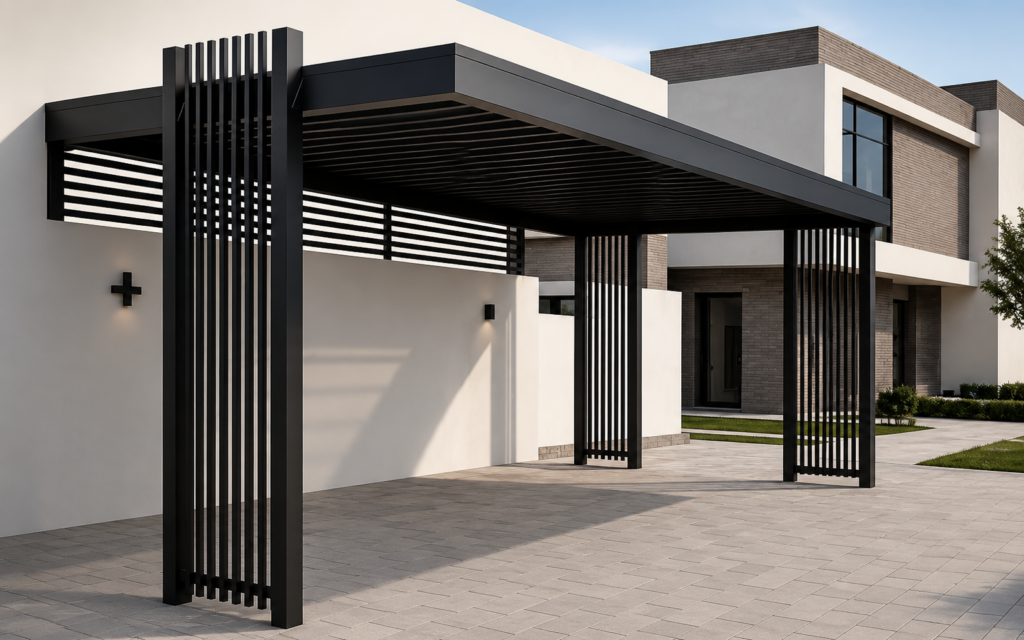
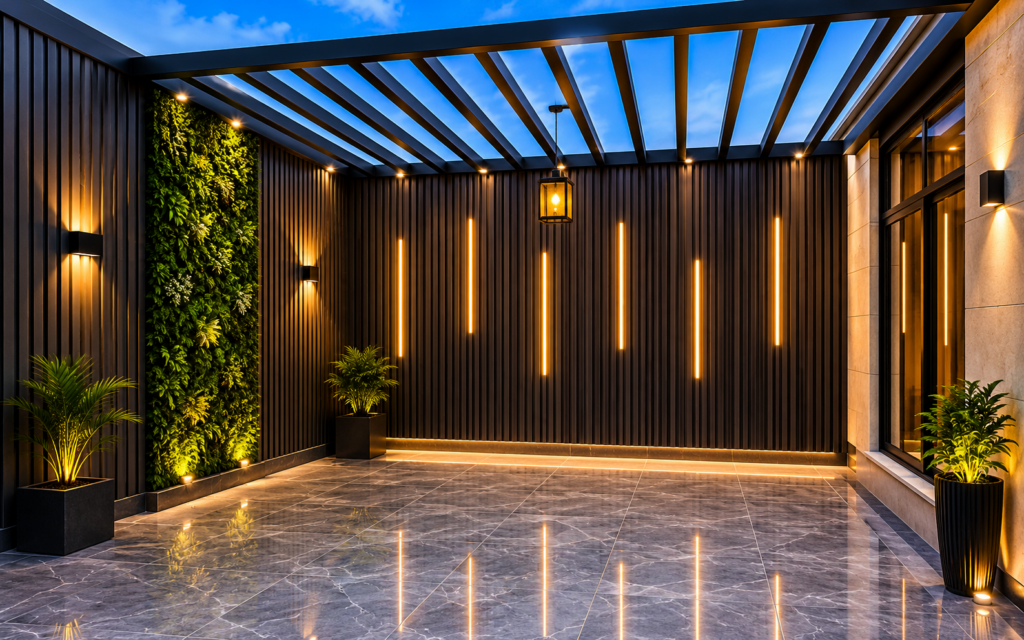
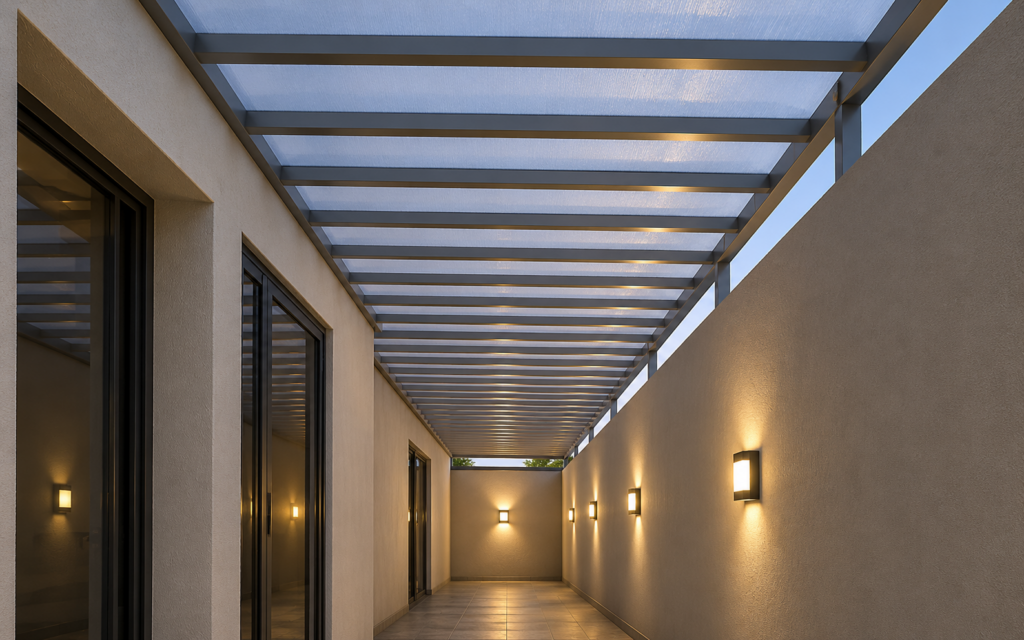
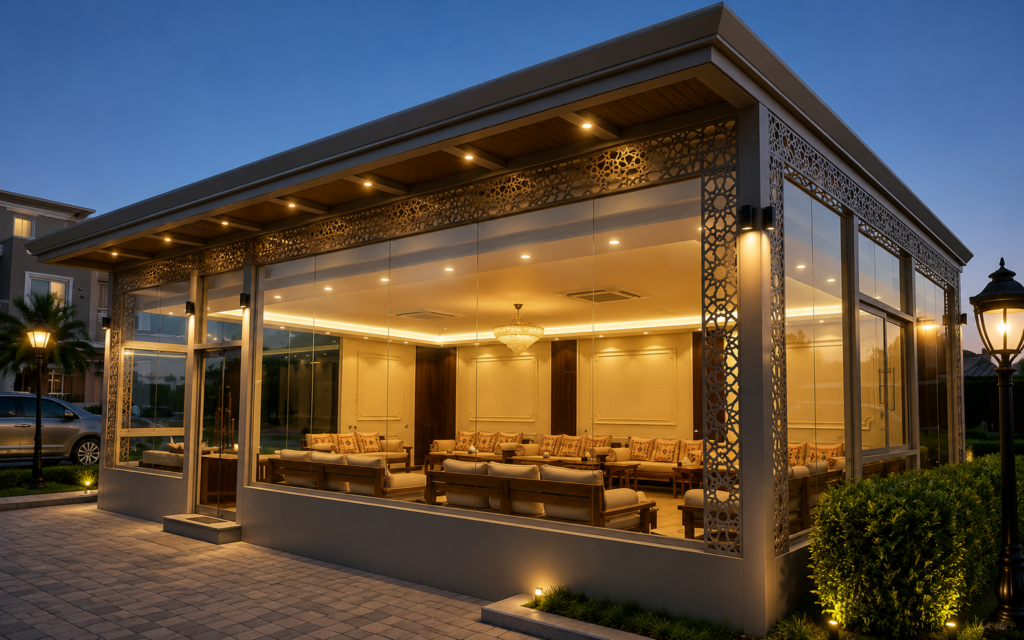
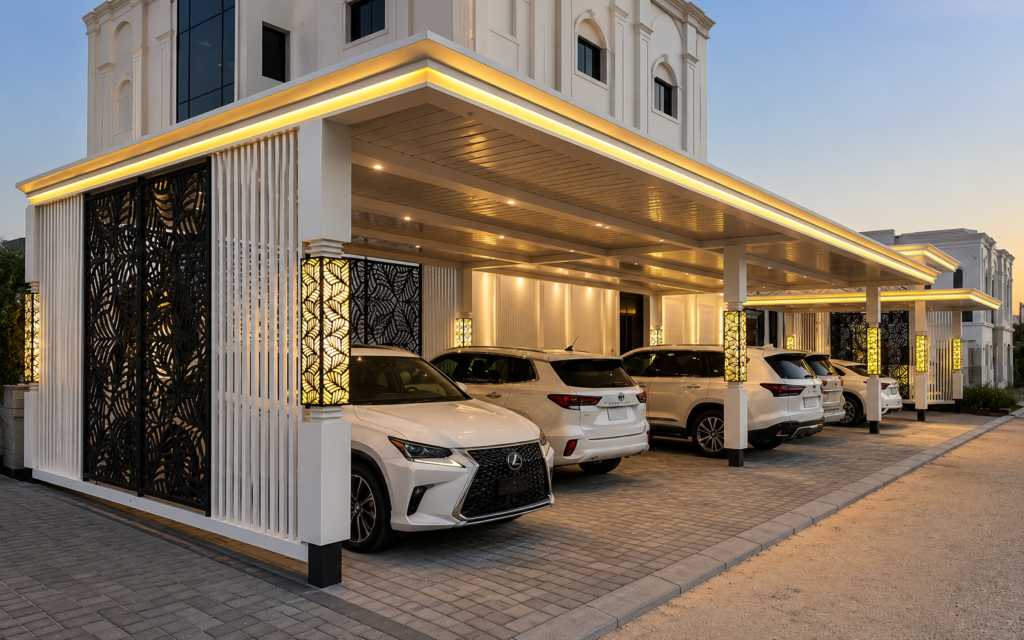
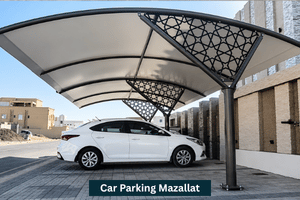
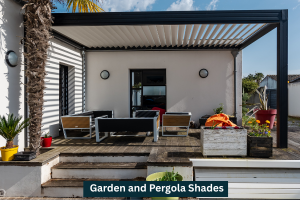
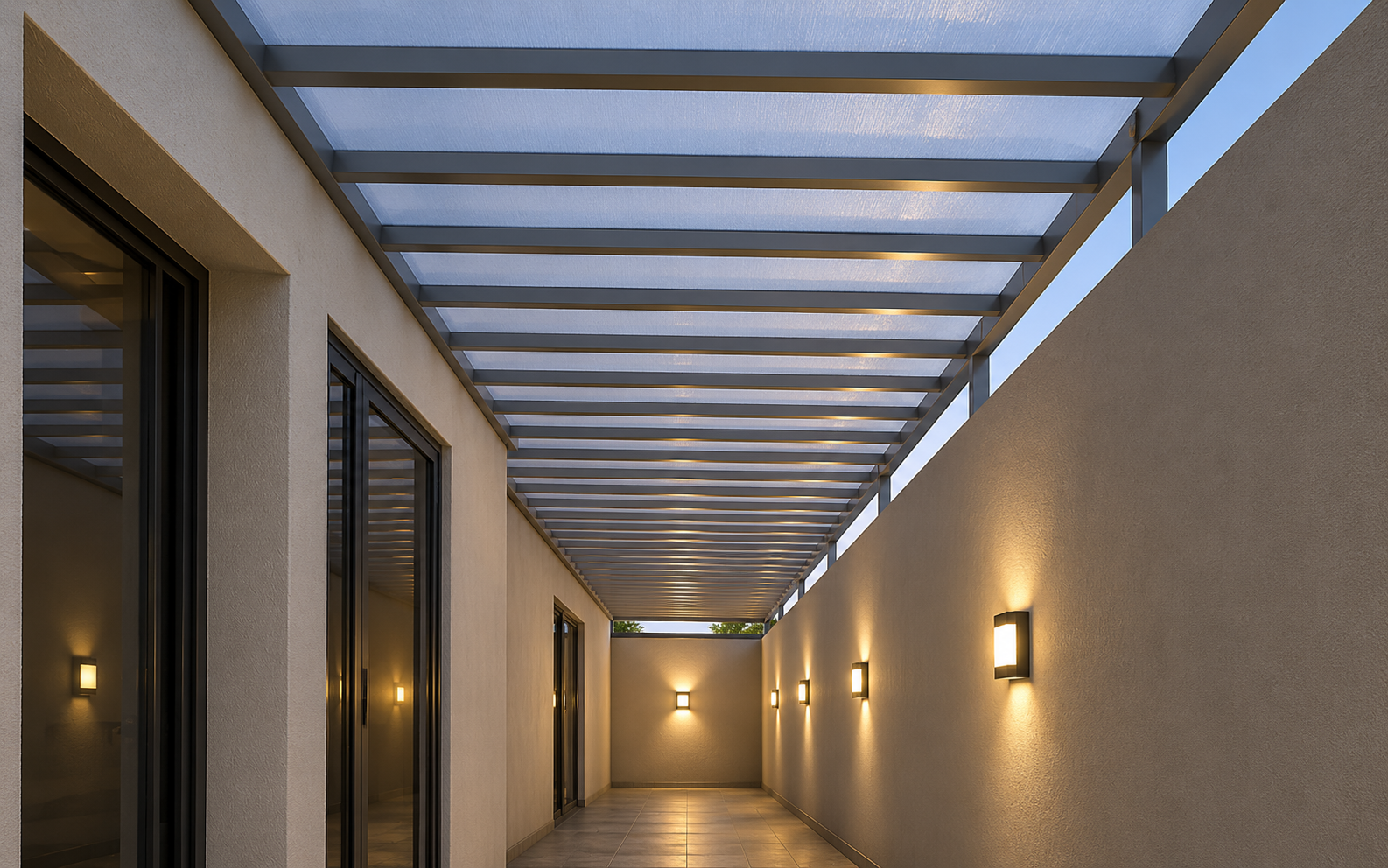
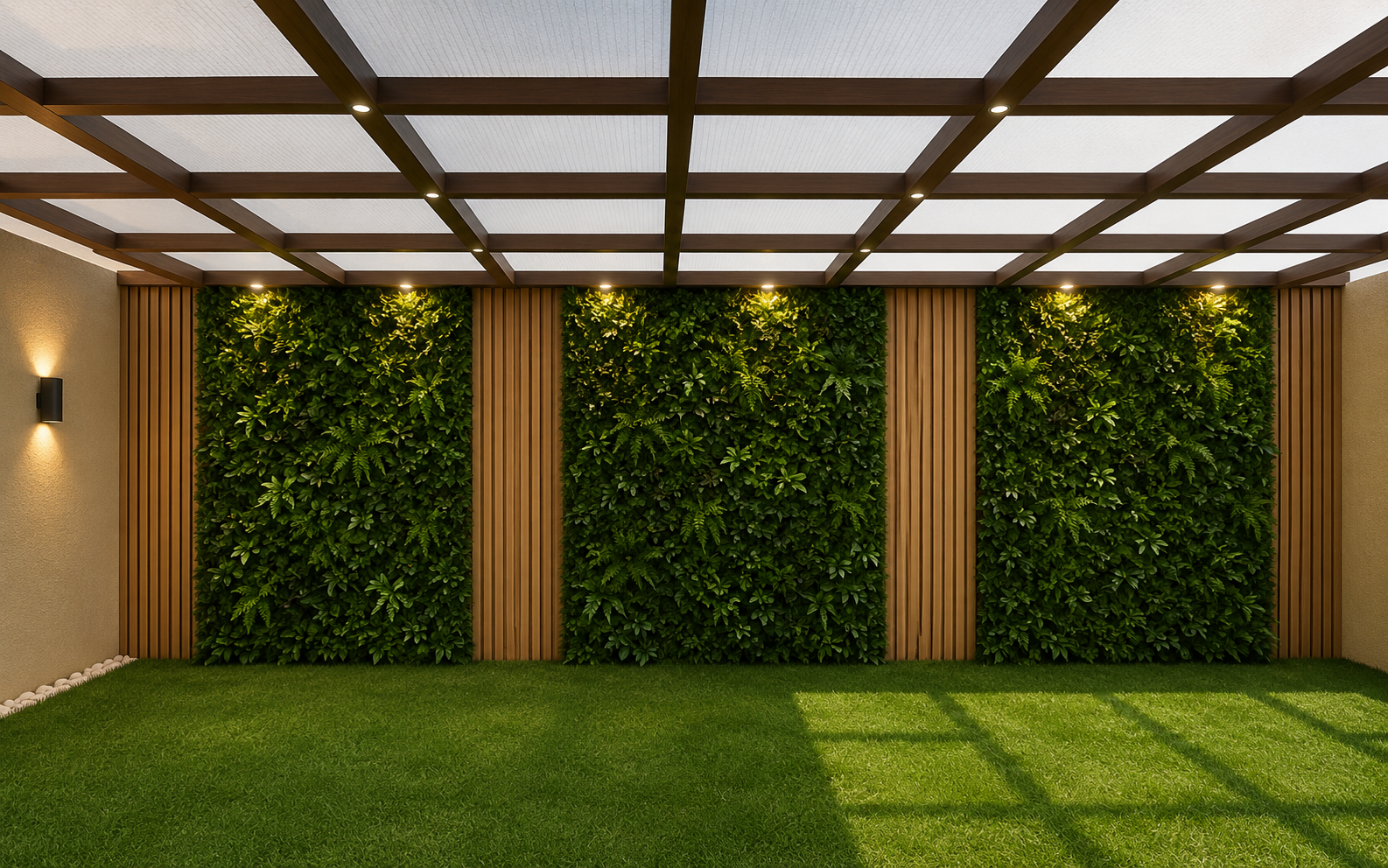
Rigid polycarbonate panels mounted on aluminum frames offer total waterproofing with excellent light diffusion. Available in clear, tinted, and opal finishes. Withstands heavy impacts and is virtually unbreakable. Popular for pergolas, car parking shades, and building walkway covers in Kuwait.
3. EPDM Rubber Membrane Canopies
Highly flexible and extremely weather-resistant. EPDM membranes are used for large-span roofing on commercial and industrial shade structures where a seamless waterproof surface is required across a wide area.
4. Tensioned Waterproof Sail Structures
A hybrid design: the aesthetic of a shade sail combined with waterproof PVC fabric. Highly architectural and used in upscale hospitality and residential projects where design matters as much as function.
Key Materials for Waterproof Shade Structures in Kuwait
- PVC-Coated Polyester (650–1000 gsm): The most widely used waterproof shade material in Kuwait. High tensile strength, weldable seams, and resistant to mould in humid conditions. Lifespan of 10–15 years with basic maintenance.
- Polycarbonate Panels (8mm–16mm twin-wall): Provides UV filtering and complete waterproofing. 200x stronger than glass. Ideal for pergola and parking shade roofing. Available in 5 standard tint levels to control light and heat transmission.
- Anodised Aluminum Framing: Corrosion-resistant, lightweight, and strong. Paired with either PVC or polycarbonate, it forms the structural backbone of any quality waterproof shade structure in Kuwait.
Step-by-Step: Waterproof Shade Structure Installation in Kuwait
- Initial Site Survey: Engineers visit the site to assess drainage requirements, structural load points, wind exposure, and sun direction. Waterproof shade requires proper drainage design to prevent water pooling.
- Drainage Planning: Gutters, downpipes, and drainage channels are designed into the structure to direct rainwater away from the covered area. Poor drainage is the most common fault in substandard waterproof shade installations.
- Frame Engineering: Steel or aluminum structural calculations are prepared. For large-span structures, a stamped engineering drawing is produced before fabrication begins.
- Foundation Work: Concrete footings are cast to specified dimensions. For pergola-style waterproof shades, corner posts are typically set in 500mm–800mm deep foundations.
- Frame Erection: The aluminum or galvanised steel frame is assembled on-site. All connections are bolted and torque-checked according to specification.
- Waterproof Covering Installation: PVC membrane is welded or polycarbonate panels are sealed with weatherproof silicone and secured with purpose-made fixing profiles.
- Water Test & Final Handover: The structure is tested with water to verify the drainage performance and verify zero leakage before client handover.
Essential Tips for Your Waterproof Shade Project
- Always insist on a drainage design drawing before work begins. A waterproof shade without proper drainage creates pooling and structural stress.
- Choose translucent PVC or clear polycarbonate panels in areas where natural light is important, such as dining areas or children’s play zones.
- Opal or tinted polycarbonate reduces glare significantly and is a better choice for outdoor workspaces or gyms.
- Request a waterproof test (pour water over the completed installation) before signing off on the project.
- Check that all seams in PVC membranes are heat-welded, not just glued. Glued seams degrade in Kuwait’s heat and UV within 1–2 seasons.
What Most Shade Providers in Kuwait Miss on Waterproofing
Many shade companies treat waterproofing as an afterthought — they simply use PVC fabric instead of HDPE without redesigning the drainage or slope of the structure. A waterproof shade structure that does not slope correctly towards gutters will accumulate standing water, creating weight stress and eventual structural failure.
Another common shortcut is using galvanised steel instead of aluminum for the frame, then painting over rust within a year. Quality waterproof shade structures use either hot-dip galvanised steel with protective coating or full anodised aluminum — both rated for long-term outdoor use in Kuwait’s coastal environment.
Why Choose Haddad Muzallat Kuwait for Waterproof Shade Structures
Haddad Muzallat Kuwait engineers waterproof shade structures from the drainage design upwards. We do not simply swap materials — we redesign the entire structure to handle both sun and rain correctly. Our portfolio includes waterproof shade projects across villas, schools, mosques, retail centres, and government facilities in Kuwait.
- ✅ Full drainage design included in every waterproof shade project
- ✅ Premium PVC membranes with heat-welded seams (not glued)
- ✅ Twin-wall polycarbonate in 5 tint options
- ✅ Anodised aluminum frames rated for Gulf coastal conditions
- ✅ Engineering drawings available on request for municipality approvals
- ✅ 5-year structural warranty on all permanent waterproof shade structures
Protect your outdoor space in every season. Contact Haddad Muzallat Kuwait for a free waterproof shade consultation.
Frequently Asked Questions: Waterproof Shade Structures in Kuwait
Q1: What is the cost of a waterproof shade structure in Kuwait?
Costs vary significantly by size and material. A small residential polycarbonate pergola shade (3m x 4m) typically costs KD 400–800. Larger PVC membrane structures for commercial use range from KD 800 to KD 3,000+. Prices include materials, frame, drainage, and installation labour. Always request a full itemised quotation before committing to any contractor.
Q2: Is PVC or polycarbonate better for waterproof shade in Kuwait?
Both are excellent waterproof materials, but they serve different purposes. PVC membrane suits flexible large-span canopies with an architectural aesthetic. Polycarbonate is better for rigid pergola or carport structures where light transmission and impact resistance matter. For most Kuwait applications, polycarbonate twin-wall is recommended for its durability, light quality, and long 15+ year lifespan.
Q3: Can waterproof shade structures be installed on existing pergolas in Kuwait?
Yes, in many cases existing pergola frames can be retrofitted with polycarbonate panels or PVC membrane roofing. A structural assessment is required first to confirm the existing frame can handle the additional load. Haddad Muzallat Kuwait assesses existing structures before recommending any retrofit waterproof shade solution for residential or commercial properties.
Q4: How do I prevent water pooling on a waterproof shade in Kuwait?
Correct slope design is the key — a minimum 5° pitch towards gutters prevents pooling. Gutters must be sized adequately for Kuwait’s intense but brief rain events. Downpipes should discharge to a storm drain or soakaway. Haddad Muzallat Kuwait includes drainage engineering in all waterproof shade projects as a standard part of the design process.
Q5: Do waterproof shade structures in Kuwait need maintenance?
Yes. Clean polycarbonate panels every 6 months with mild soapy water to remove dust and algae. Inspect PVC seams annually for any stress cracking. Check gutters and downpipes before the November rain season. Clear any debris from gutter channels after major dust storms. Annual maintenance by a professional ensures your waterproof shade structure performs correctly for its full expected lifespan.
Internal Resources
Explore all shade solutions: Haddad Muzallat Kuwait – Complete Shade Services. See also our guide to Shade Sails in Kuwait for tensioned fabric options.
E-E-A-T Trust Statement
This content was authored by Haddad Muzallat Kuwait’s shade engineering team, drawing on over a decade of waterproof structure installations across all Kuwait governorates. Technical specifications reflect industry standards and direct project experience as of June 2026.
External reference: TensiNet – International Body for Tensile Architecture & Membrane Structures
Author: Haddad Muzallat Technical Team | Published: June 2026